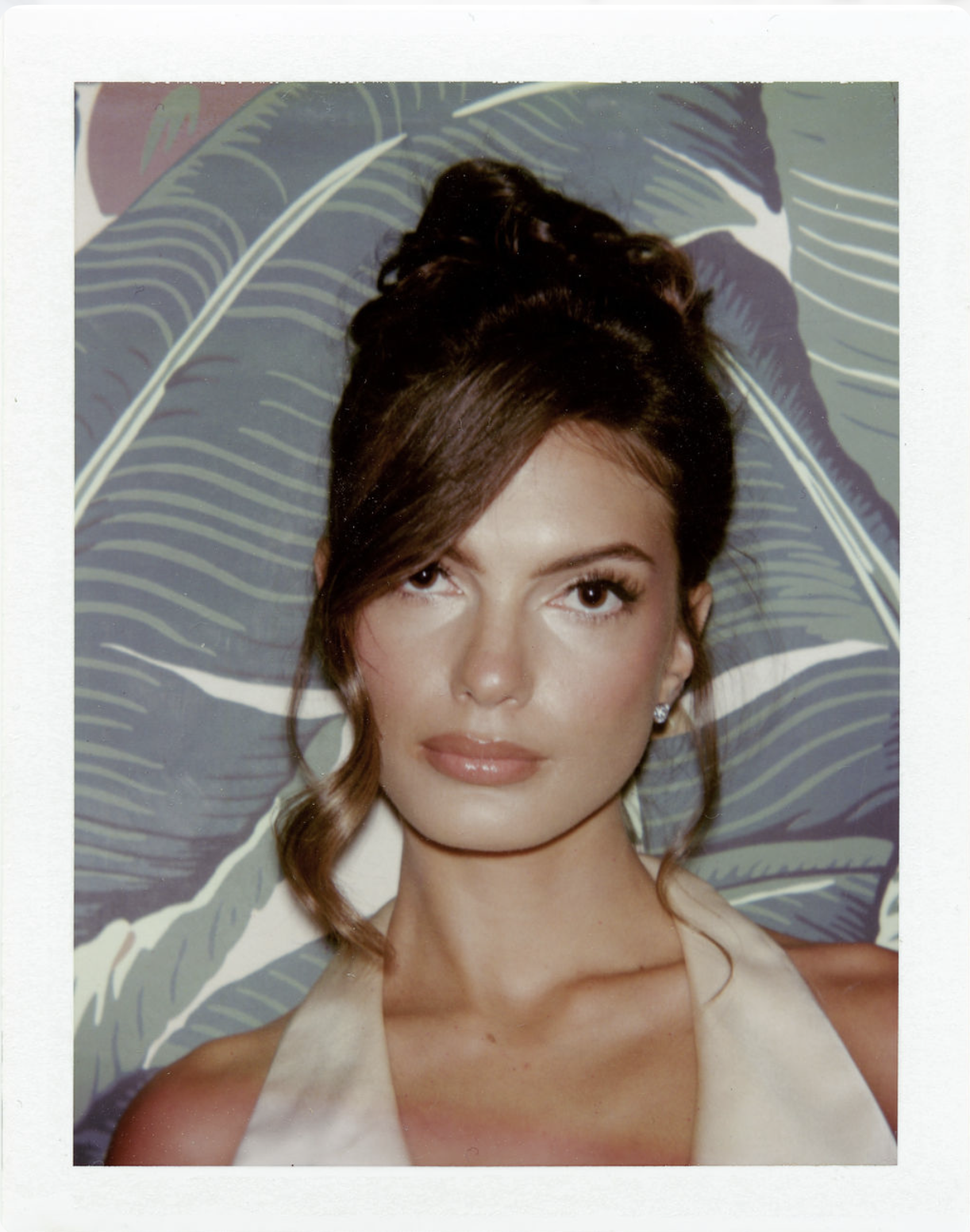
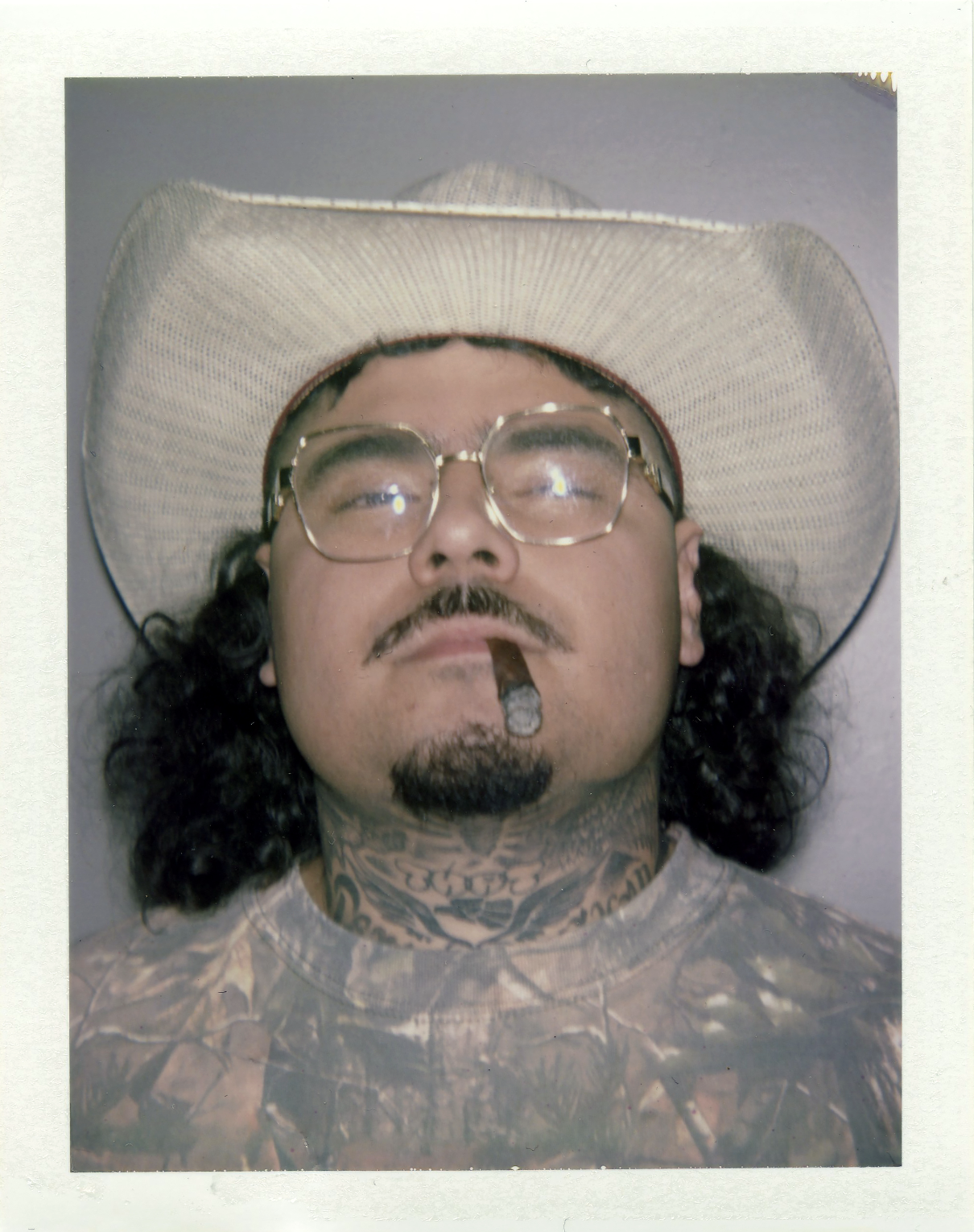
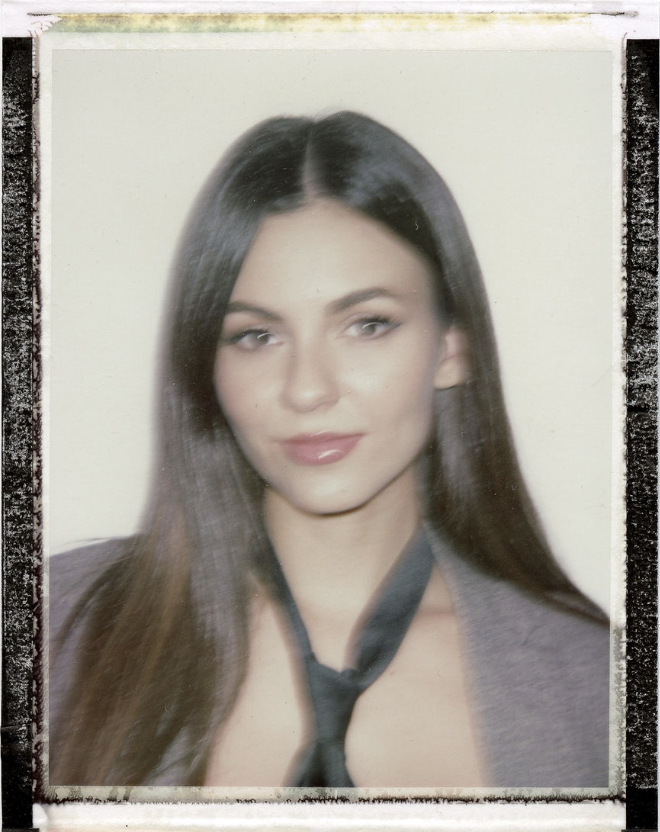
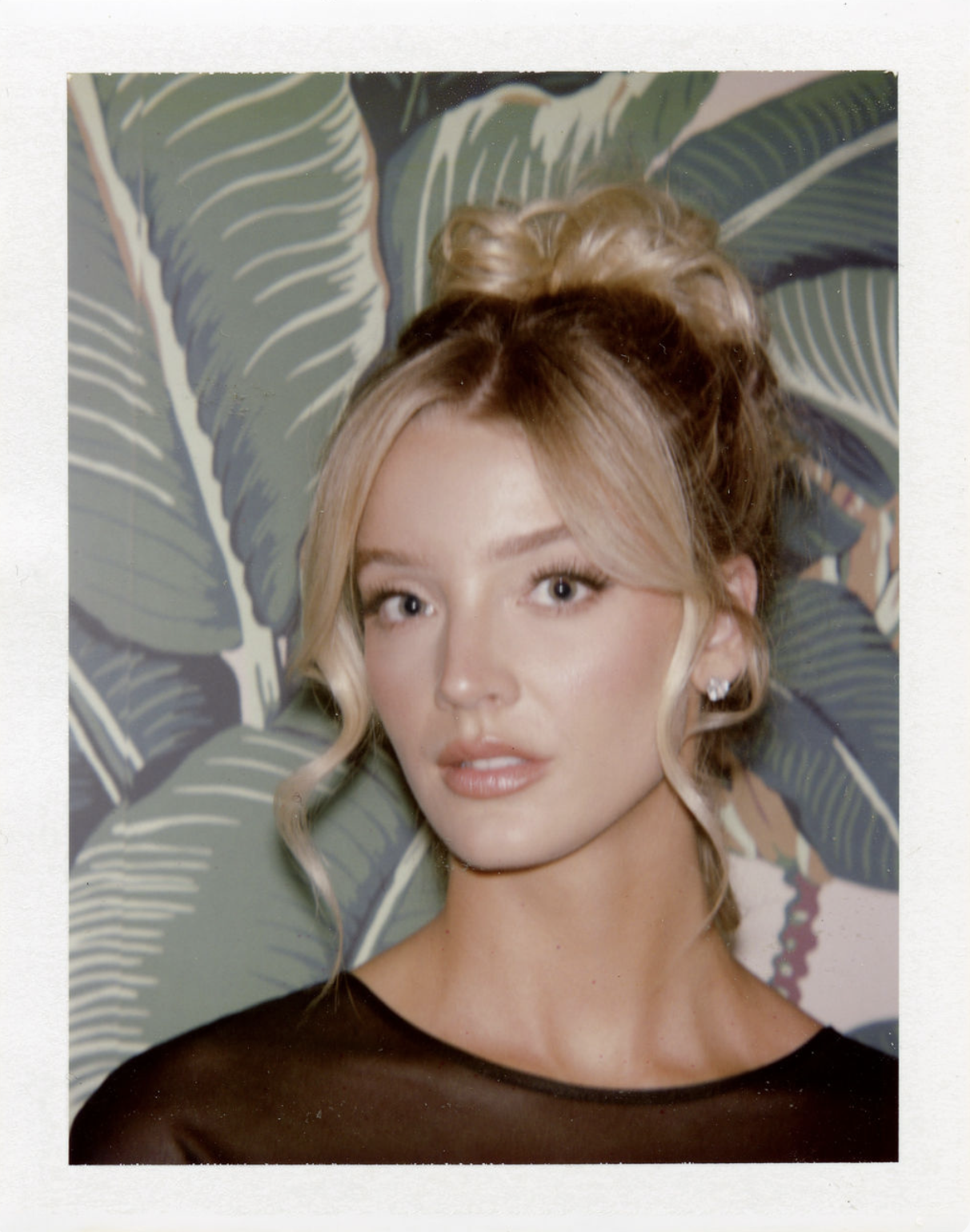
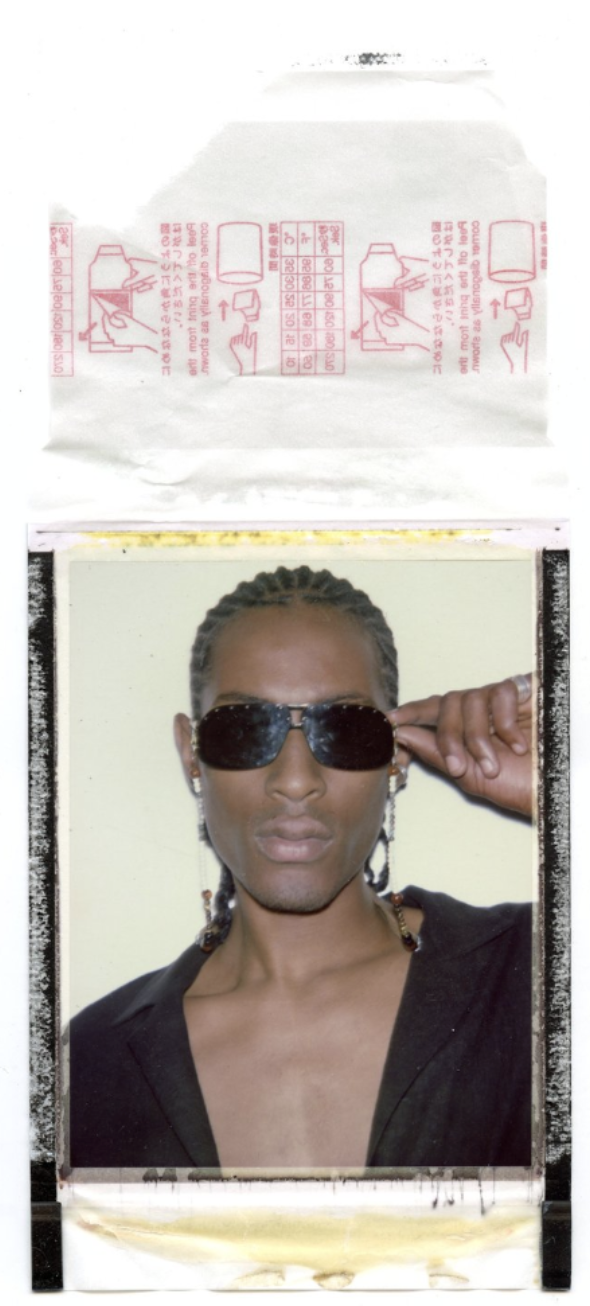
A portrait made on a 1971 Polaroid Big Shot. Ten minutes in the Oceanside studio. You leave holding the only copy.
Book a sessionPolaroid built the Big Shot in 1971 and stopped in 1973. It sold badly and was gone in under three years, which is how a camera designed for one narrow job ends up being the best tool in the room fifty years later.
It does exactly one thing. A fixed 220mm lens, no zoom, no focus ring, no aperture control and no meter. The only way to focus it is to move your whole body until a split rangefinder image lines up, which happens at exactly 40 inches and nowhere else. The lens is a slow f/29, so it cannot make a picture without a flash firing.
Every one of those limitations is a portrait decision that has already been made for you. Long lens compression, a fixed working distance, flat frontal light, and a shallow depth of field that puts the eyes in focus and lets everything else fall away. Andy Warhol shot his commissioned portraits on one for years, and the reason those pictures all feel related is that the camera made most of the choices.
Mine is a working camera, not a shelf piece, modified to trigger studio strobes instead of the disposable flashcubes it shipped with. It has no screen and no preview. What you see is what came out of it.
Peel apart film is not instant film as most people know it. The exposed sheet and a negative sandwich together with a pod of chemistry between them. You pull the whole thing out through a set of rollers that burst the pod, the picture develops in your hand while you wait, and then you peel the two layers apart. That last part is what everyone remembers.
Polaroid stopped making it in 2008. Fujifilm carried the format alone until 2016, when the last mass produced packs shipped. Nothing has replaced it at scale since. A small Austrian workshop hand makes a modern version in limited runs, but the film in most working cameras today came off a shelf that will never be restocked, and it has been sitting there for a decade.
That is why the frames look the way they do, and it is why this session has an end date. When the stock is gone, the offering goes with it.
Yes. We peel the first one together, and you can add another on the spot for $60 as long as I have stock loaded.
Both. The print goes home with you the same day, and I email a high resolution scan within two business days, sized for web and for print.
Yes, and it is the easiest way to do it. If you are already in the studio for headshots or branding work, frames can be added at $60 each.
At 40 inches it is tight, but two people close together works and it looks great. Mention it at booking so I can plan the light.
No charge with 48 hours notice. Inside 48 hours the session fee is retained, because the film for your slot is pulled and set aside for you.